Connecting a model to a warehouse does not create a dependable analyst. The model still needs the team’s methods for checking data, choosing calculations, presenting evidence, and reviewing a deliverable.
Anthropic defines a Skill as a folder of instructions, scripts, and resources loaded when relevant. That turns repeated prompt explanation into a versioned work protocol and allows deterministic code to handle steps where token generation is a poor substitute.
A skill packages method, not missing truth
Instructions define sequence and limits. Scripts perform cleaning, computation, or conversion. Templates and references constrain the artifact. Together they can support spreadsheets, documents, presentations, and PDFs.
They do not invent enterprise metric definitions or access rights. An analytics skill still needs explicit semantic sources, source precedence, permitted tools, and a human owner for consequential decisions.
Why it is easier to govern than a one-off prompt
Skills can live in version control, receive review, run against regression tasks, and be distributed as approved versions. Part of model behavior moves from an ephemeral conversation into inspectable files.
That also introduces supply-chain risk. A skill may contain executable code or direct the model toward files and connectors. Anthropic advises using trusted sources; an enterprise should add provenance review, least privilege, isolated execution, pinned dependencies, and artifact scanning.
A useful analytics skill stack
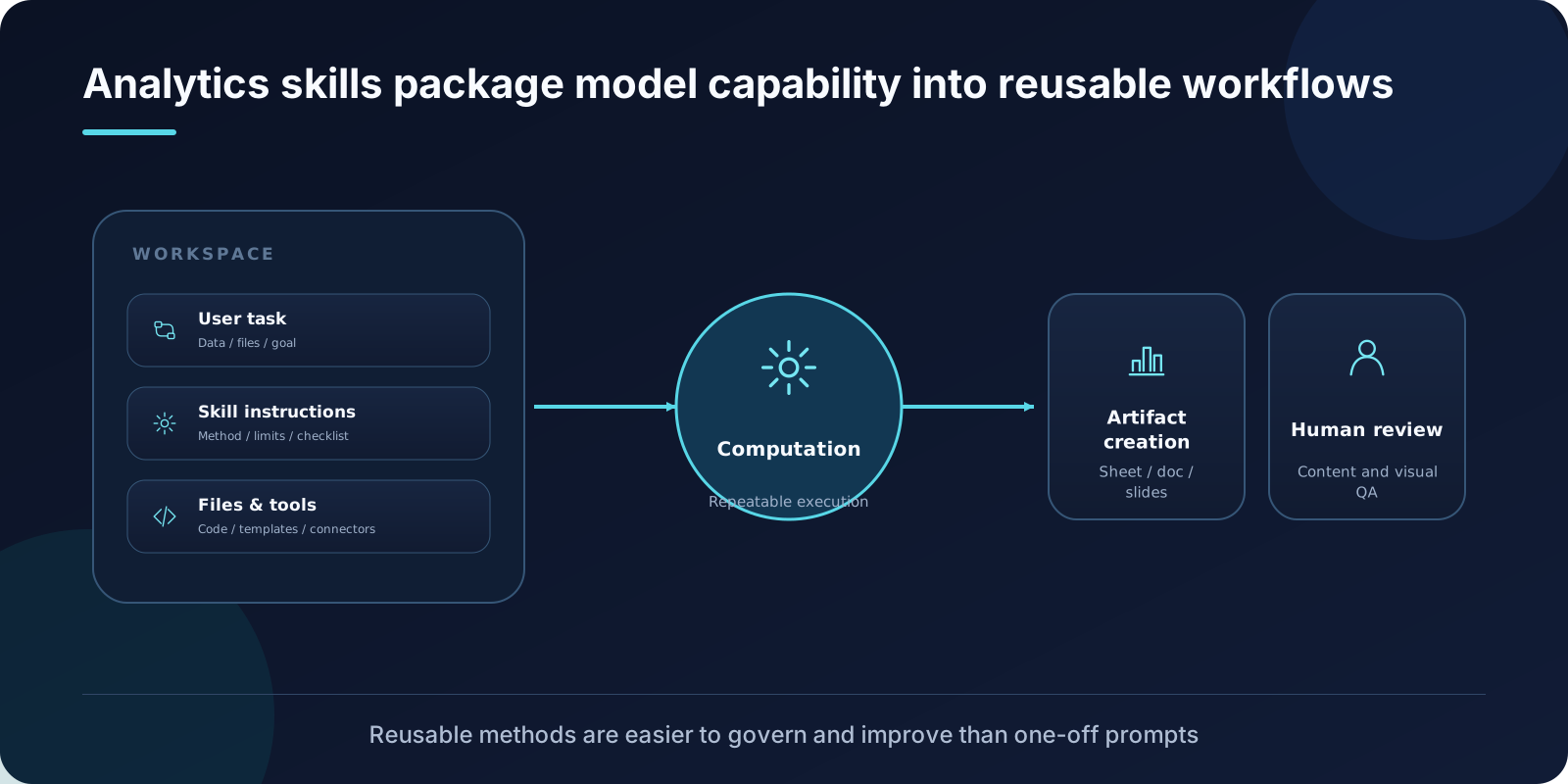
A mature workflow has six responsibilities: interpret the user task, load method instructions, obtain the required files and tools, perform repeatable computation, create the artifact, and conduct content plus visual review. Each block in the cover diagram is testable; none is merely “do analysis.”
Start with a frequent, bounded deliverable such as a weekly operating review. Encode input contracts, metric definitions, error handling, chart conventions, and acceptance checks. Turn historical tasks into regression cases and review failure types rather than one average satisfaction score.
The durable value of Skills is not giving a model more personas. It is turning expert practice into workflows that can be maintained, composed, and verified.
Reference: Introducing Agent Skills